




Table of Contents
ToggleVirtual reality examples are everywhere in 2025, and they’re changing how people work, learn, and play. VR technology has moved far beyond gaming headsets gathering dust in closets. Today, surgeons practice complex procedures in virtual operating rooms. Architects walk clients through buildings that don’t exist yet. Students explore ancient Rome without leaving their classrooms.
This shift matters because VR solves real problems. It reduces training costs, improves learning retention, and creates experiences that were impossible just a decade ago. The global VR market is projected to exceed $50 billion by 2026, driven by practical applications across dozens of industries.
This article breaks down the most impactful virtual reality examples across six major sectors. Each section shows how VR works in practice, not as a gimmick, but as a tool that delivers measurable results.
Key Takeaways
- Virtual reality examples span six major sectors in 2025, including healthcare, education, real estate, and corporate training—far beyond just gaming.
- VR medical training allows surgeons to practice complex procedures safely, while VR therapy effectively treats PTSD, phobias, and chronic pain.
- Students using immersive VR learning experiences show up to 30% better information retention compared to traditional classroom methods.
- Real estate agents and architects use VR to showcase properties and designs remotely, reducing change orders by up to 40% during construction.
- Corporate giants like Walmart have trained over one million employees with VR, improving test scores by 10-15% over conventional training.
- As VR hardware costs drop significantly, practical virtual reality applications are becoming accessible to mainstream businesses and schools.
Gaming and Entertainment
Gaming remains the most visible use case for virtual reality. Companies like Meta, Sony, and Valve have released headsets that immerse players in 360-degree environments. Games such as Half-Life: Alyx and Beat Saber demonstrate what VR gaming can achieve when developers build specifically for the medium.
The experience differs fundamentally from traditional gaming. Players don’t just control a character, they become the character. They physically duck behind cover, reach out to grab objects, and turn their heads to scan for enemies. This level of immersion creates emotional responses that flat screens simply can’t match.
Entertainment extends beyond games. Virtual reality examples in this space include VR concerts where fans stand “front row” from their living rooms. Artists like The Weeknd and Billie Eilish have hosted virtual performances that attracted millions of viewers. Movie studios are experimenting with VR films that place viewers inside the story rather than in front of it.
Theme parks have adopted VR to enhance existing rides. Riders on roller coasters wear headsets that sync visuals with physical movement. This transforms a standard coaster into a dragon flight or a space battle, without building new infrastructure.
The gaming and entertainment sector continues to push VR hardware forward. Each generation of headsets offers better resolution, wider fields of view, and more accurate tracking. These improvements benefit every other industry that uses virtual reality.
Healthcare and Medical Training
Healthcare offers some of the most compelling virtual reality examples available today. Medical schools now use VR to train surgeons before they touch a real patient. These simulations allow students to practice procedures repeatedly, making mistakes in a safe environment where no one gets hurt.
Stanford Medicine uses VR to teach anatomy. Students can examine a virtual heart from any angle, zoom in on valves, and watch blood flow in real time. This beats textbooks and even cadavers for understanding three-dimensional relationships between organs.
VR also helps patients directly. Therapists use virtual reality to treat PTSD, phobias, and anxiety disorders. A patient with a fear of heights can gradually confront that fear in a controlled virtual environment. Studies show this exposure therapy works as well as traditional methods, sometimes better.
Pain management is another growing application. Burn victims at hospitals use VR during wound care. The immersive experience distracts the brain from pain signals. Research from the University of Washington found that VR reduced pain intensity by up to 50% during medical procedures.
Physical rehabilitation benefits from VR too. Stroke patients use virtual reality programs to regain motor function. The technology turns repetitive exercises into engaging activities, which increases patient compliance. When therapy feels like a game, patients complete more sessions.
Hospitals are investing in VR for surgical planning as well. Surgeons can study 3D models of a patient’s specific anatomy before operating. This preparation reduces surprises during actual procedures and improves outcomes.
Education and Learning Environments
Virtual reality transforms how students absorb information. Traditional classrooms rely on reading and listening. VR adds experience. Students don’t just learn about the Great Wall of China, they walk along it.
History classes use VR to recreate ancient civilizations. Students can explore a Roman forum, attend a medieval market, or witness historical events. This contextual learning improves retention. Research suggests that immersive experiences increase recall by 30% compared to traditional methods.
Science education benefits enormously from virtual reality examples. Chemistry students manipulate molecular structures with their hands. Biology students shrink down to observe cellular processes. Physics students watch gravitational forces in action. These abstract concepts become tangible and memorable.
Language learning has embraced VR as well. Programs place students in virtual Paris cafes or Tokyo train stations. Learners practice conversations with AI characters in realistic settings. This contextual practice builds confidence faster than classroom drills.
Special education programs find VR particularly valuable. Students with autism use virtual environments to practice social situations. They can rehearse job interviews, navigate stores, or handle unexpected changes, all in a safe space before facing real-world challenges.
Schools face cost barriers, but prices are dropping. A classroom VR setup that cost $50,000 in 2019 now runs under $10,000. As hardware becomes more affordable, virtual reality in education will expand from elite institutions to mainstream schools.
Real Estate and Architecture
Real estate agents have discovered that virtual reality sells properties faster. Buyers can tour homes remotely, walking through rooms and inspecting details without scheduling in-person visits. This saves time for everyone and helps agents show properties to out-of-state buyers.
Virtual staging represents another practical application. Instead of furnishing empty properties with physical items, agents create virtual furniture layouts. Buyers see the potential of blank spaces. Multiple staging options can exist for the same property, appealing to different tastes.
Architects use VR to solve problems before construction begins. Clients struggle to understand blueprints and 3D renderings on flat screens. Virtual reality lets them stand inside the proposed building. They can sense the ceiling height, check sightlines, and identify issues that drawings might miss.
This pre-construction visualization saves money. Changes during the design phase cost a fraction of changes during building. When clients experience a space in VR and request modifications, those adjustments happen digitally rather than physically. Some firms report reducing change orders by 40% after implementing VR presentations.
Commercial developers use virtual reality examples to lease spaces before buildings exist. Retail tenants can visualize their store layout in an unbuilt shopping center. Office tenants can plan workstation arrangements. This accelerates leasing timelines and generates revenue earlier in the development cycle.
Urban planners have started using VR to engage communities. Residents can experience proposed developments virtually and provide feedback. This transparent process reduces opposition and improves project outcomes.
Workplace Training and Simulation
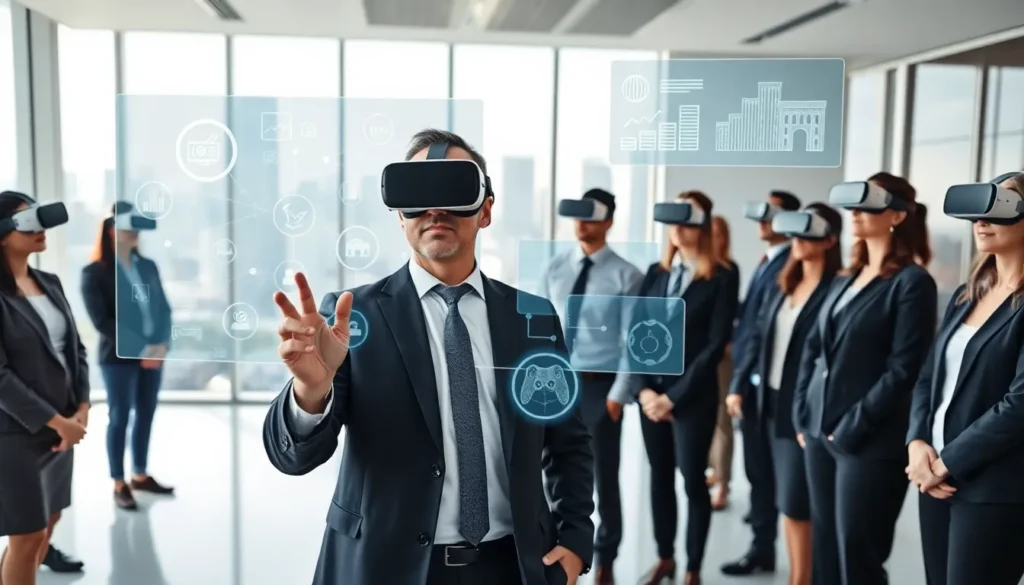
Corporate training programs increasingly rely on virtual reality examples to prepare employees for high-stakes situations. Walmart trained over one million associates using VR modules covering everything from holiday rush scenarios to active shooter responses. The company found that VR training improved test scores by 10-15% compared to traditional methods.
Manufacturing companies use VR to train workers on expensive equipment. New hires can practice operating machinery without risking damage or injury. They make mistakes, learn from them, and build competence before touching real production lines.
Aviation has used flight simulators for decades. Modern VR expands this concept. Airlines train cabin crews for emergency evacuations in virtual aircraft. The stress of these simulations prepares attendants for real crises better than classroom instruction.
Oil and gas companies face unique challenges. Workers operate in hazardous environments where errors can be fatal. VR training recreates these conditions safely. Employees practice emergency responses to fires, leaks, and equipment failures. They develop muscle memory and decision-making skills that could save lives.
Soft skills training has entered the VR space too. Employees practice difficult conversations, terminating staff, delivering bad news, or handling customer complaints. The virtual scenarios provide realistic emotional pressure without real consequences. Managers report feeling more prepared after VR sessions.
Retail chains use virtual reality to standardize customer service across thousands of locations. New employees experience consistent training regardless of which store they join. This uniformity improves brand experience and reduces variability in service quality.