





Table of Contents
ToggleVirtual reality (VR) creates computer-generated environments that users can explore and interact with. This technology places people inside simulated worlds through specialized headsets and controllers. VR has moved from science fiction into everyday applications across gaming, healthcare, education, and business. Understanding what virtual reality is helps explain why this technology continues to grow in popularity and practical use. This guide covers how VR works, the different types available, current applications, and the technology’s strengths and weaknesses.
Key Takeaways
- Virtual reality creates computer-generated environments that users can explore and interact with through specialized headsets and motion controllers.
- VR works by displaying stereoscopic 3D images while tracking head movements in real time to create an immersive sense of presence.
- Four main types of virtual reality exist: non-immersive, semi-immersive, fully immersive, and web-based—each offering different levels of engagement.
- Beyond gaming, virtual reality is transforming healthcare, education, real estate, and military training by enabling safe practice of complex or dangerous scenarios.
- VR improves learning retention and enables experiences otherwise impossible, from exploring ancient civilizations to practicing surgical procedures.
- Current limitations include high equipment costs, potential motion sickness, and the time-intensive nature of creating quality VR content.
How Virtual Reality Works
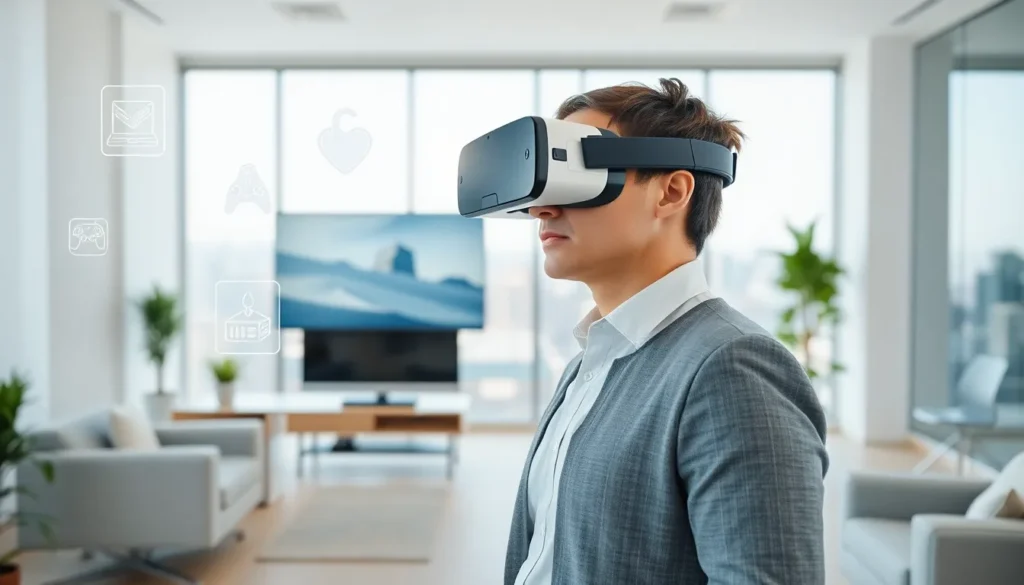
Virtual reality works by tricking the human senses into believing they exist in a different environment. The process starts with a VR headset that displays separate images to each eye. This creates stereoscopic 3D vision, giving users depth perception within the virtual space.
Motion sensors inside the headset track head movements in real time. When users turn their heads left, right, up, or down, the displayed image adjusts instantly. This head tracking creates the illusion of looking around a physical space.
Many virtual reality systems include handheld controllers. These devices let users grab, point, throw, and manipulate objects within the simulation. Advanced controllers track finger movements for even more precise interactions.
Spatial audio plays a key role in VR immersion. Sound changes based on the user’s position and orientation. A voice behind the user actually sounds like it comes from behind. This audio positioning strengthens the sense of presence.
Some VR setups use external sensors placed around a room. These sensors track the headset’s position as users walk around. This room-scale tracking allows people to physically move through virtual spaces rather than staying in one spot.
The virtual reality experience depends heavily on frame rate and latency. The display must refresh at least 90 times per second to prevent motion sickness. Any delay between head movement and visual response breaks the illusion and causes discomfort.
Types of Virtual Reality Experiences
Virtual reality comes in several forms, each offering different levels of immersion and interaction.
Non-Immersive VR
Non-immersive virtual reality uses standard computer screens without headsets. Users view 3D environments through monitors and control them with keyboards, mice, or game controllers. Video games and architectural visualization software often use this approach. The experience feels less intense but remains accessible to anyone with a computer.
Semi-Immersive VR
Semi-immersive VR provides a partial virtual experience. Flight simulators and driving simulators fall into this category. Users sit in realistic cockpits or driver seats surrounded by large screens. The physical setup adds authenticity while screens display the virtual environment. Training programs frequently use semi-immersive VR because it balances realism with practicality.
Fully Immersive VR
Fully immersive virtual reality blocks out the real world completely. Users wear headsets that cover their entire field of vision. Motion controllers and sometimes full-body tracking suits capture every movement. High-end gaming systems and professional training applications use fully immersive VR. This type delivers the strongest sense of presence but requires the most expensive equipment.
Web-Based VR
Web-based VR runs directly in internet browsers without software installation. Technologies like WebXR enable simple virtual experiences on smartphones and computers. These experiences typically offer less immersion but reach wider audiences. Marketing campaigns and virtual tours often use web-based VR for accessibility.
Common Uses for Virtual Reality Today
Virtual reality has found practical applications across many industries. These uses extend far beyond entertainment.
Gaming and Entertainment
Gaming remains the most visible use of virtual reality. Players step inside game worlds rather than watching them on screens. VR gaming creates physical engagement, players dodge, duck, reach, and swing to interact with virtual objects. Concerts, movies, and social platforms also use VR to create shared experiences across distances.
Healthcare and Medical Training
Surgeons practice complex procedures in virtual reality before operating on real patients. Medical students study human anatomy by exploring 3D body models. Therapists use VR to treat phobias, PTSD, and anxiety disorders through controlled exposure therapy. Pain management programs distract patients with calming virtual environments during uncomfortable treatments.
Education and Training
Students visit ancient Rome, explore the ocean floor, or walk on Mars through virtual reality field trips. Corporate training programs simulate dangerous situations without real-world risk. Mechanics learn to repair equipment. Pilots practice emergency procedures. Retail workers handle difficult customer interactions. VR training often produces better retention than traditional methods.
Real Estate and Architecture
Buyers tour homes in different cities without traveling. Architects walk clients through buildings before construction begins. Interior designers show furniture arrangements in actual room dimensions. Virtual reality eliminates guesswork and helps people make confident decisions about major purchases.
Military and Defense
Military organizations use virtual reality for combat training, vehicle operation, and strategic planning. Soldiers experience realistic battle scenarios in safe environments. Equipment operators practice with expensive machinery without risk of damage. VR reduces training costs while improving readiness.
Benefits and Limitations of VR Technology
Virtual reality offers clear advantages but also faces real challenges. Understanding both sides helps set realistic expectations.
Key Benefits
VR creates safe spaces for dangerous training. Firefighters, pilots, and medical professionals practice life-or-death scenarios without actual risk. Mistakes become learning opportunities rather than disasters.
The technology enables experiences otherwise impossible. People with mobility limitations can climb mountains, swim with dolphins, or travel the globe. Historical events come alive. Abstract concepts become visible and touchable.
Virtual reality improves learning outcomes. Studies show VR training participants retain information longer and perform tasks better than those using traditional methods. The emotional engagement of VR creates stronger memories.
Remote collaboration becomes more effective in VR. Teams scattered across continents meet in shared virtual spaces. They review 3D models together, sketch ideas in the air, and communicate with natural body language.
Current Limitations
Cost remains a barrier. Quality VR headsets range from $300 to over $1,000. Powerful computers add another $1,000 or more. Many consumers and organizations find these prices prohibitive.
Motion sickness affects some users. The mismatch between visual movement and physical stillness causes nausea, headaches, and disorientation. Manufacturers continue improving latency and frame rates to reduce these effects.
VR headsets create physical isolation. Users cannot see or hear their real surroundings while immersed. This raises safety concerns and limits social interaction with people physically present.
Content development takes significant time and money. Creating high-quality virtual reality experiences requires specialized skills and expensive software. This limits the variety of available VR content compared to traditional media.